

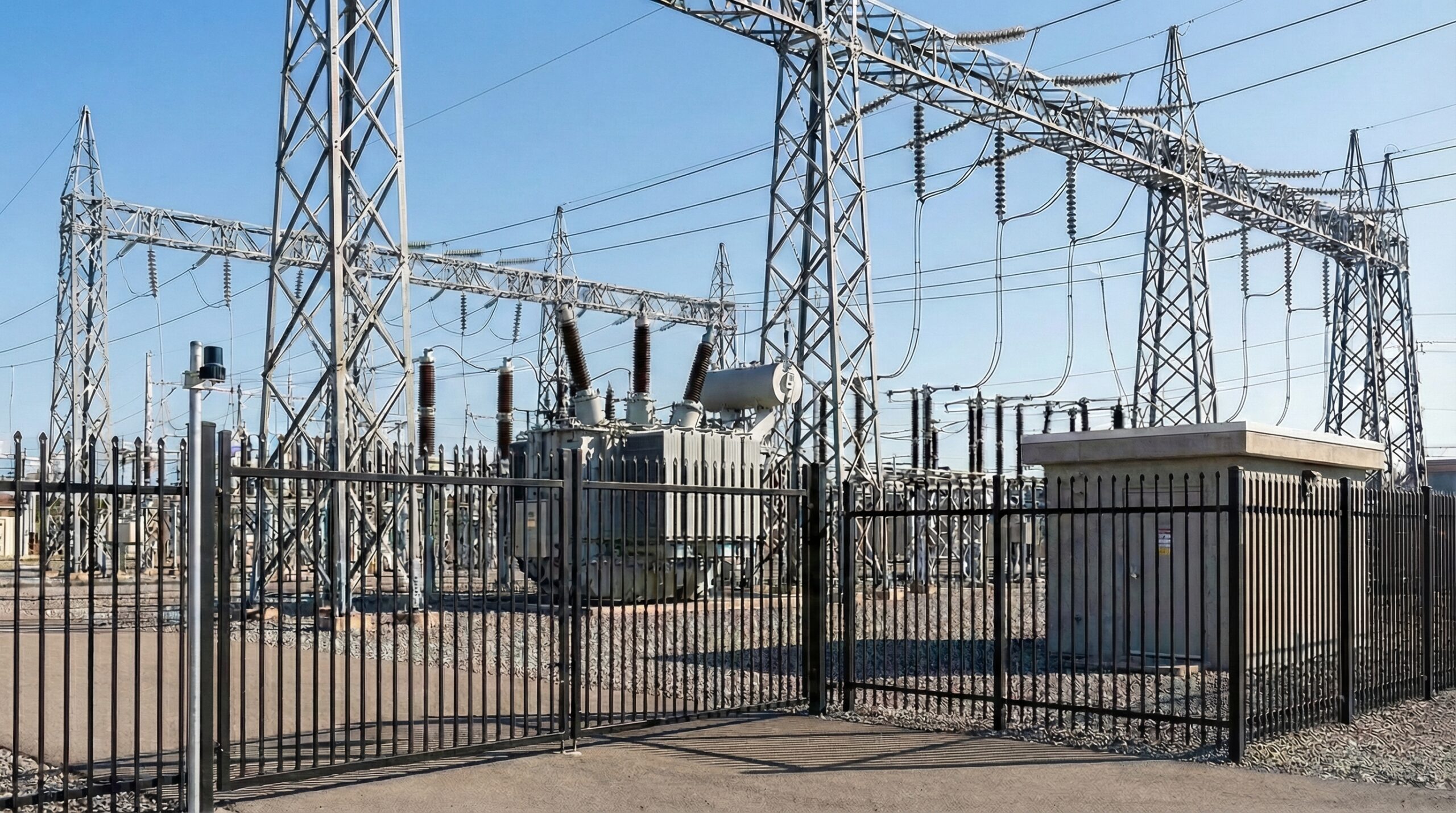
Energy and Substation Security with 3D LiDAR
Substations sit next to roads, sidewalks and busy neighbors, and legacy perimeter systems alarm on all of it. Quanergy Q-TRACK 3D LiDAR detects real intrusions at the fence line, filters out passing traffic, and cues your cameras automatically, unaffected by the electromagnetic interference of high-voltage equipment.
When every passing car is an alarm, real threats get missed
Substations protect equipment that keeps the lights on, yet many sit beside roadways, sidewalks and off-site activity. Legacy perimeter intrusion detection systems lack the spatial awareness to tell a passing vehicle from a person at the fence, so operators chase alarm after alarm.
At one large energy provider's high-value substation, the legacy system flooded operators with alerts from nearby traffic and foot traffic. The result was alarm fatigue, and a security operation that could no longer trust its own alarms.
After Q-TRACK, the site runs 24-hour automated monitoring with fewer than three nuisance alerts per day, better than the operator's internal target.
Read the substation case studySix ways 3D LiDAR protects energy infrastructure
One perception platform covers the fence line, the gates, the equipment yard and the control house, at staffed and unmanned sites alike.
Detect at the fence, not the transformer
Q-TRACK LR sensors are meshed around the perimeter to create continuous coverage, detecting and tracking people and vehicles as they approach and move along the fence line.
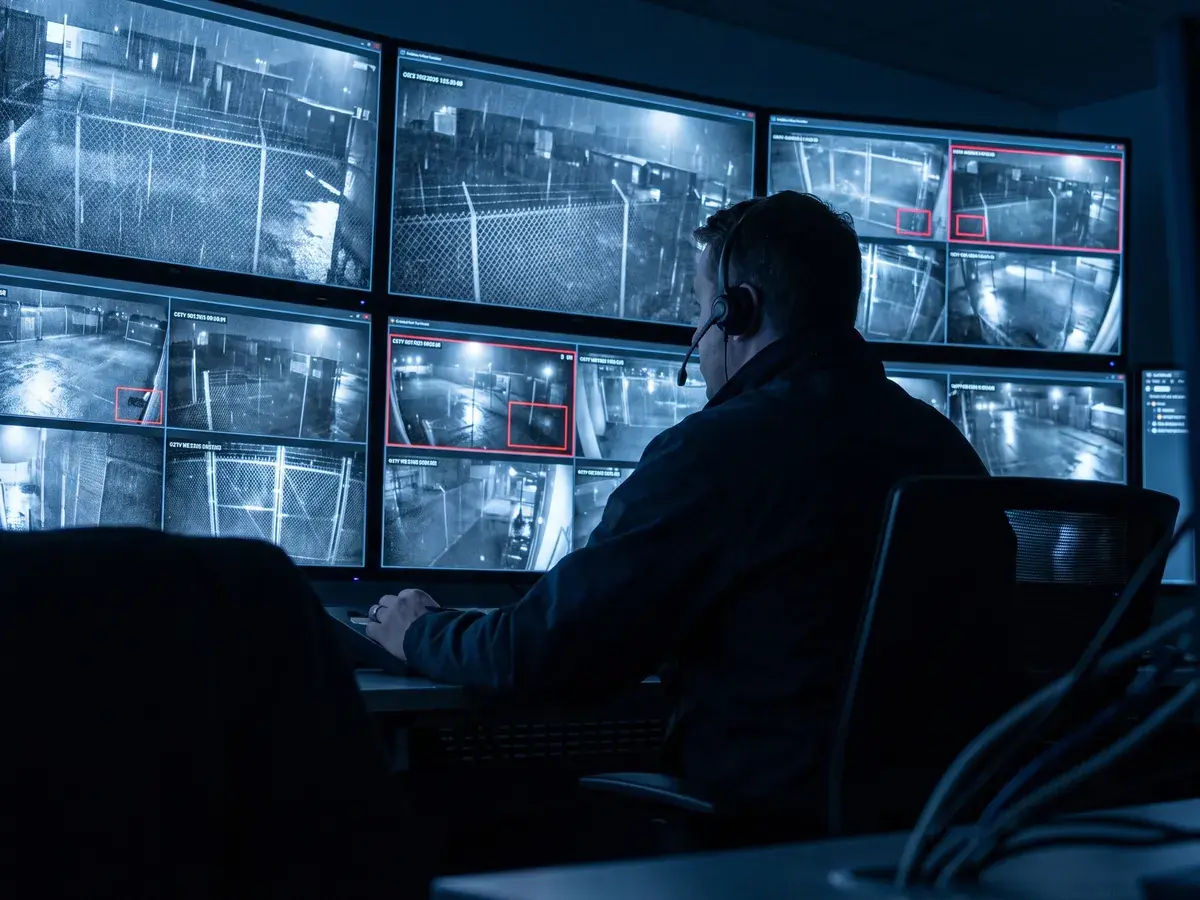
Filter out the road next door
3D spatial awareness separates real intrusions from passing vehicles, pedestrians and off-site activity, so operators spend their time on events that matter.
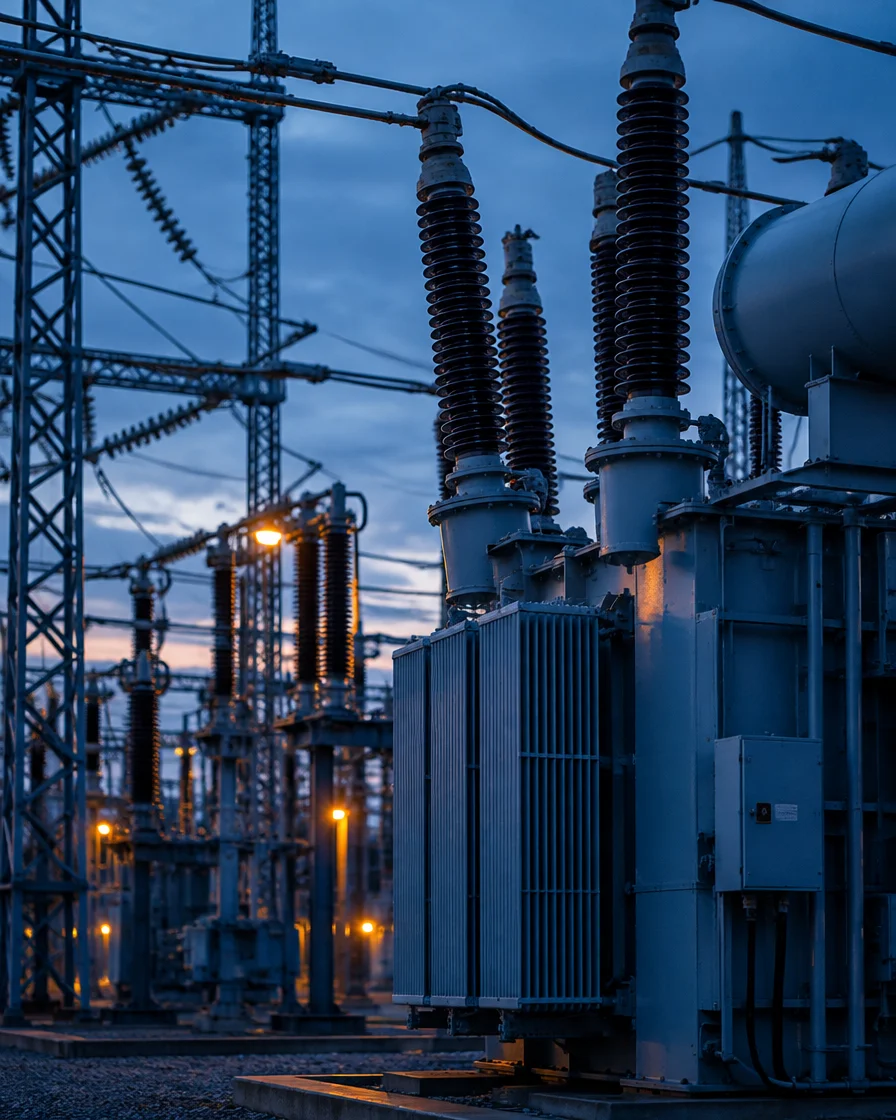
Unaffected by electromagnetic interference
Transformers and switchgear generate electromagnetic fields that can degrade radar. LiDAR uses laser-based optical sensing, not radio frequency, so detection stays consistent next to energized equipment.
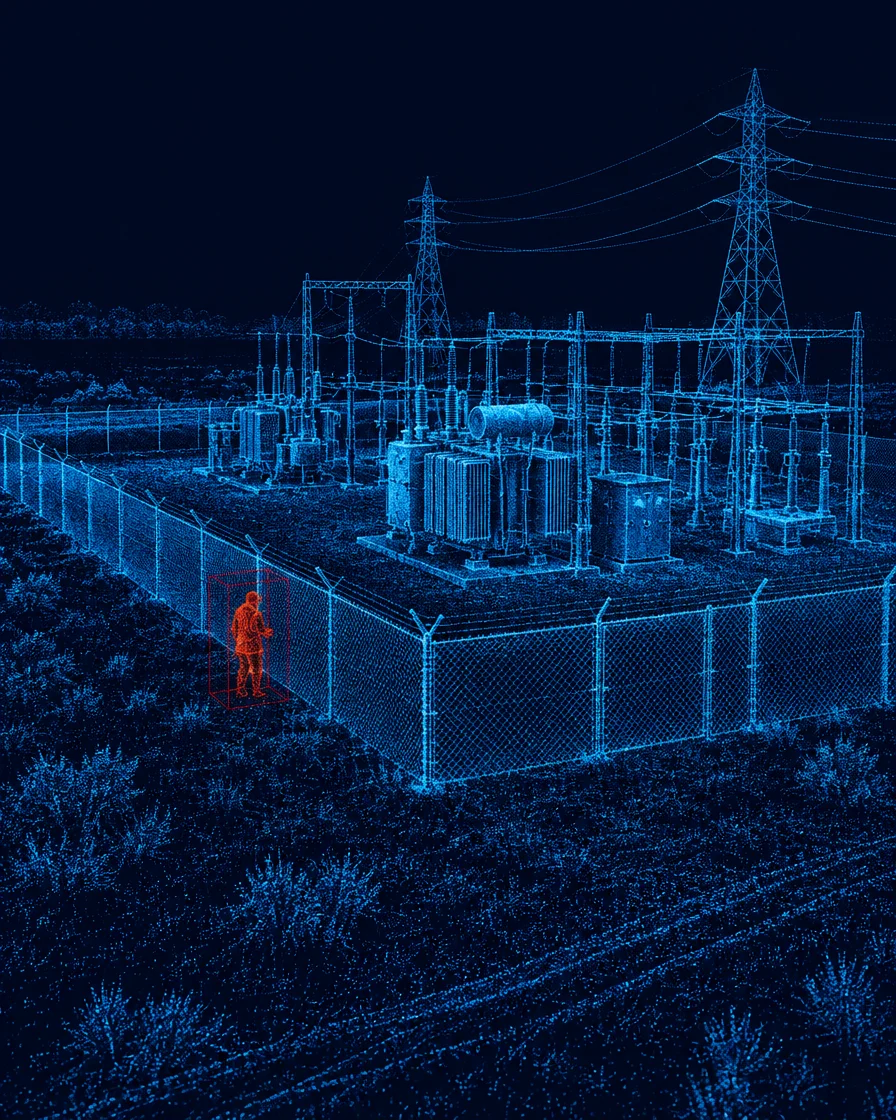
No lights. Still watching.
LiDAR brings its own light, so detection does not depend on floodlights or the time of day. Keep 24-hour awareness at remote and unstaffed substations, in total darkness.
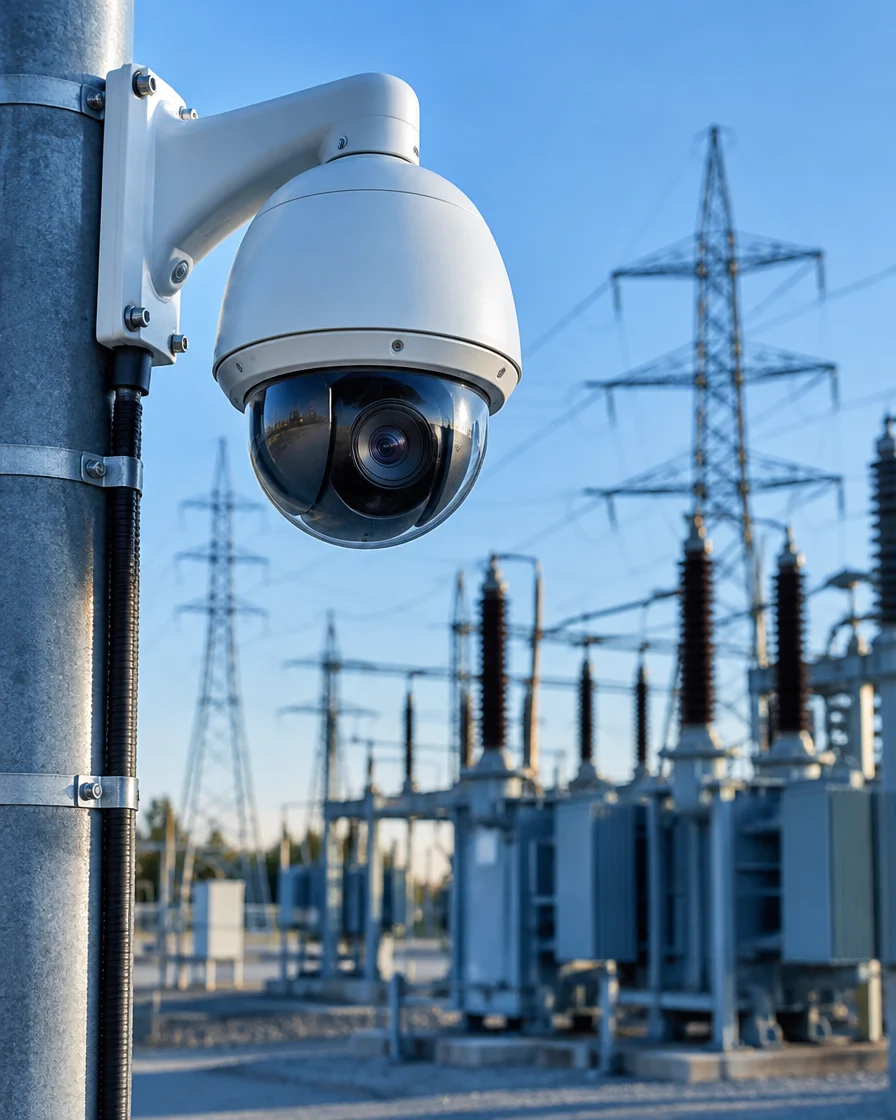
Cameras turn to the intruder
On detection, Q-TRACK sends real-time geolocation coordinates to nearby PTZ cameras over ONVIF or native drivers, so cameras slew to the target and operators verify in seconds.
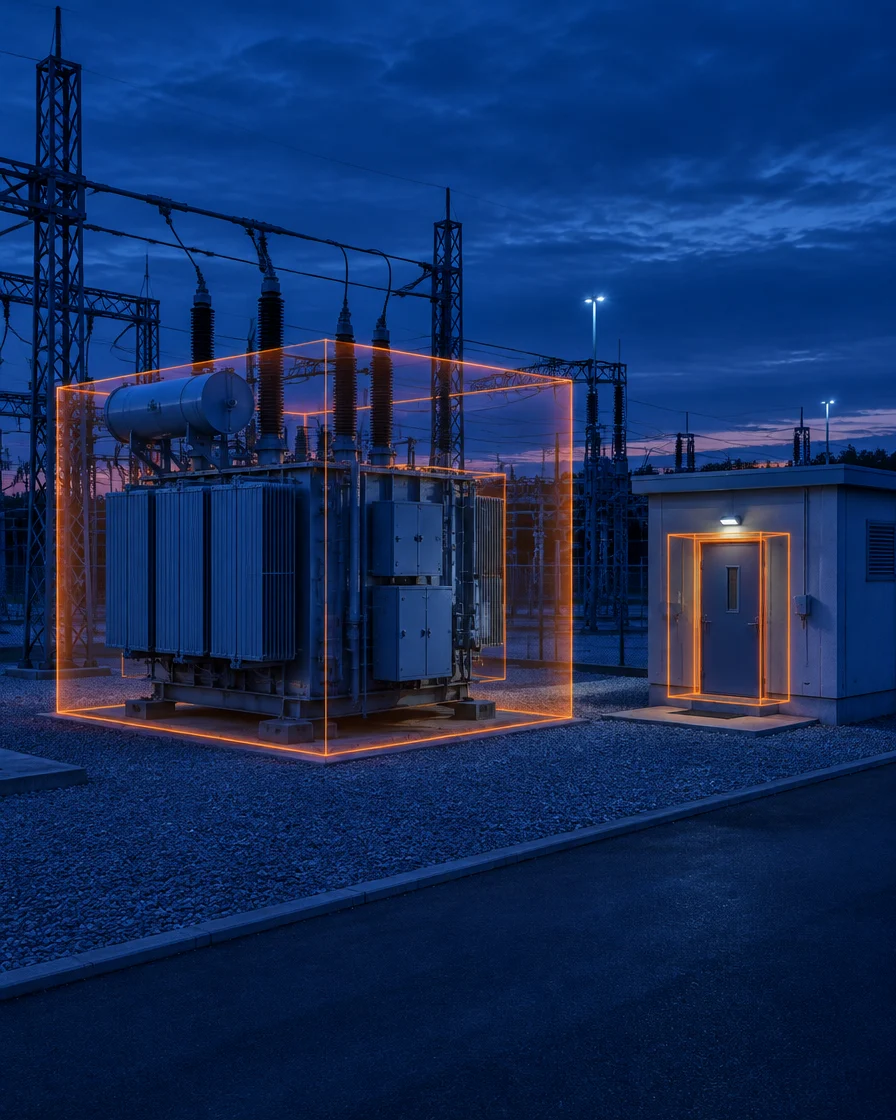
Zones around what matters most
Draw 3D zones around transformers, control houses, gates and equipment yards. Q-SHIELD 2D LiDAR adds focused intrusion alerts at doorways and restricted areas.
Detect. Track. Classify. Alert.
Quanergy 3D LiDAR measures millions of 3D points per second. QORTEX DTC perception software detects, tracks and classifies every object, then sends alerts your existing security stack can act on.
- 1
Detect
360° 3D LiDAR covers wide areas with minimal blind spots, in any light or weather, including total darkness.
- 2
Track
QORTEX DTC follows every object with centimeter-level position, speed and direction, tracking up to 1,000 objects at once.
- 3
Classify
People and vehicles are classified by size and movement. Anything else is reported as an unclassified object, so alarms can be set on people and vehicles only.
- 4
Alert
Configurable 3D zones trigger real-time alerts and PTZ slew-to-cue, sent to your VMS and security operations center.
Fits the security stack you already run
Q-TRACK integrates with leading video management and security management platforms, so you upgrade detection without replacing your control room.
- Advancis
- Bosch/IQSIGHT BVMS
- exacqVision
- Genetec Security Center
- Hirsch Velocity
- IntelliCene / Symphia Control
- Milestone XProtect
- Motorola Avigilon Unity
- Network Optix
- Salient CompleteView
- Teledyne FLIR
Q-TRACK supports many more VMS and security platforms not listed here; confirm the integration for your platform and version during the assessment.
Cameras see pixels. LiDAR sees space.
A camera gives operators a flat picture and leaves them to judge how far away someone is and whether they crossed the line. Quanergy 3D LiDAR measures the space itself, so every person and vehicle has a real position in a real 3D zone. When someone enters that zone, LiDAR flags the event on the matching camera view in your VMS.
- Centimeter-level 3D position for every person and vehicle
- Zones and distances measured in meters, not pixels
- Speed and direction tracked as people and vehicles move
- Alarms tied to the right camera view in your VMS
- The same awareness in any light, including total darkness
How an energy provider ended alarm fatigue at a substation
A large energy provider replaced a legacy perimeter intrusion detection system at a high-value substation surrounded by roads, foot traffic and off-site activity. Radar was ruled out because of electromagnetic interference from high-voltage equipment. Multiple Q-TRACK LR sensors were meshed around the perimeter and integrated with Genetec Security Center and ONVIF PTZ cameras.
- Fewer than three nuisance alerts per day
- 24-hour automated perimeter monitoring
- Automatic PTZ slew-to-cue for instant visual verification
This deployment was featured in asmag.com, How LiDAR strengthens perimeter security at electrical substations, September 2026.

3D LiDAR solutions redefining critical infrastructure security
Substation security with 3D LiDAR: common questions
Why do substations need perimeter intrusion detection?
Electrical substations contain critical infrastructure that supports power transmission and distribution. Unauthorized access creates safety risks and can disrupt energy services. A perimeter intrusion detection system lets operators detect threats early and respond before intruders reach sensitive equipment.
How does 3D LiDAR reduce nuisance alarms at a substation?
3D LiDAR builds a high-resolution three-dimensional model of the monitored area and measures the size, position, speed and direction of every object. That lets the system separate real intrusions from passing vehicles, pedestrians and off-site activity. At one high-value substation, Q-TRACK reduced nuisance alerts to fewer than three per day.
Why choose LiDAR over radar at a substation?
Radar uses radio frequency signals, and electromagnetic interference from transformers, switchgear and transmission equipment can affect its performance. LiDAR uses laser-based optical sensing rather than radio frequency, so it is not affected by electromagnetic interference and delivers consistent detection next to high-voltage equipment.
Can it work with our existing cameras and VMS?
Yes. Q-TRACK integrates with leading VMS platforms, including Genetec Security Center, and supports ONVIF and native-driver PTZ control. On detection it sends real-time coordinates to PTZ cameras so they slew to the target for immediate visual verification.
Does it work at night and at unmanned sites?
Yes. LiDAR provides its own illumination, so detection works in total darkness without floodlights, and the system runs 24-hour automated monitoring at remote and unstaffed sites.
How much area does one sensor cover?
Each Q-TRACK LR sensor covers up to 15,000 square meters with a 360 degree horizontal field of view. Multiple sensors are meshed together for continuous coverage of the full perimeter.
Which Quanergy products are used at substations?
Q-TRACK LR 3D LiDAR sensors for long-range perimeter detection and tracking, QORTEX DTC perception software, and Q-SHIELD 2D LiDAR for focused intrusion alerts at doorways, control houses and restricted equipment zones.
Protect the substation that keeps the lights on
Tell us about your substations, switchyards or generation sites. Our team will map where 3D LiDAR cuts nuisance alarms and closes blind spots.