


Port Security with 3D LiDAR
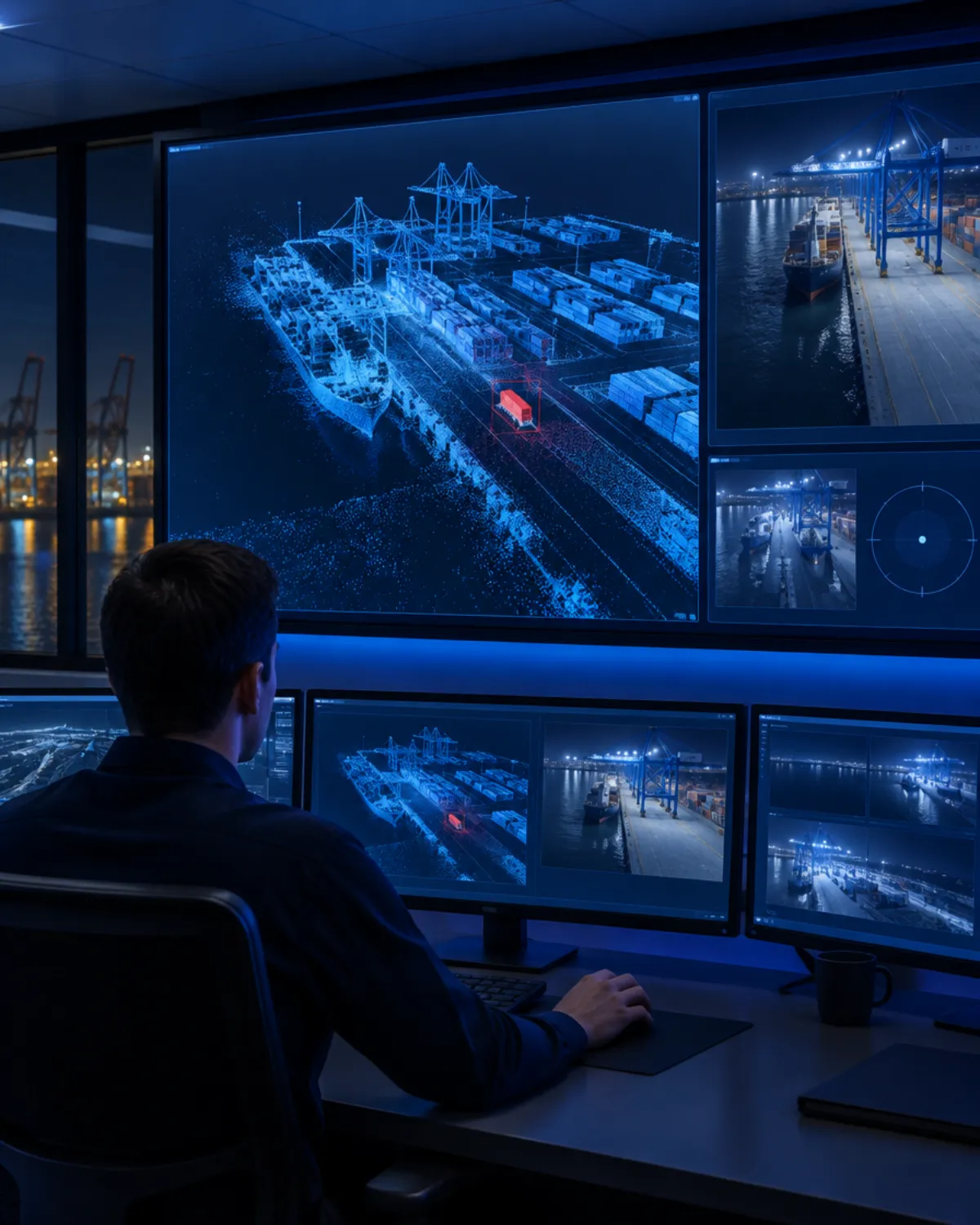
Ports are points of entry. Quanergy 3D LiDAR protects waterfront perimeters, gates, container yards and berths, detecting and tracking people and vehicles in real time, in any light, and turning your PTZ cameras to the threat.
Source: Quanergy and iCent case study.
Fence sensors only see the fence
Port perimeters run for kilometers along the water. Fence-mounted sensors and cameras detect only at the fence line, raise false alarms in wind and weather, and leave operators guessing about what is happening in the yard.
3D LiDAR covers the open space, not just the fence. Every person and vehicle gets a real position, speed and direction, in real time and in any light, so operators can see a threat before it reaches a berth or a container row.
Alerts go straight to your PTZ cameras and operations center, so every event is verified in seconds.
Six ways 3D LiDAR protects ports
One perception platform from the gate to the berth.
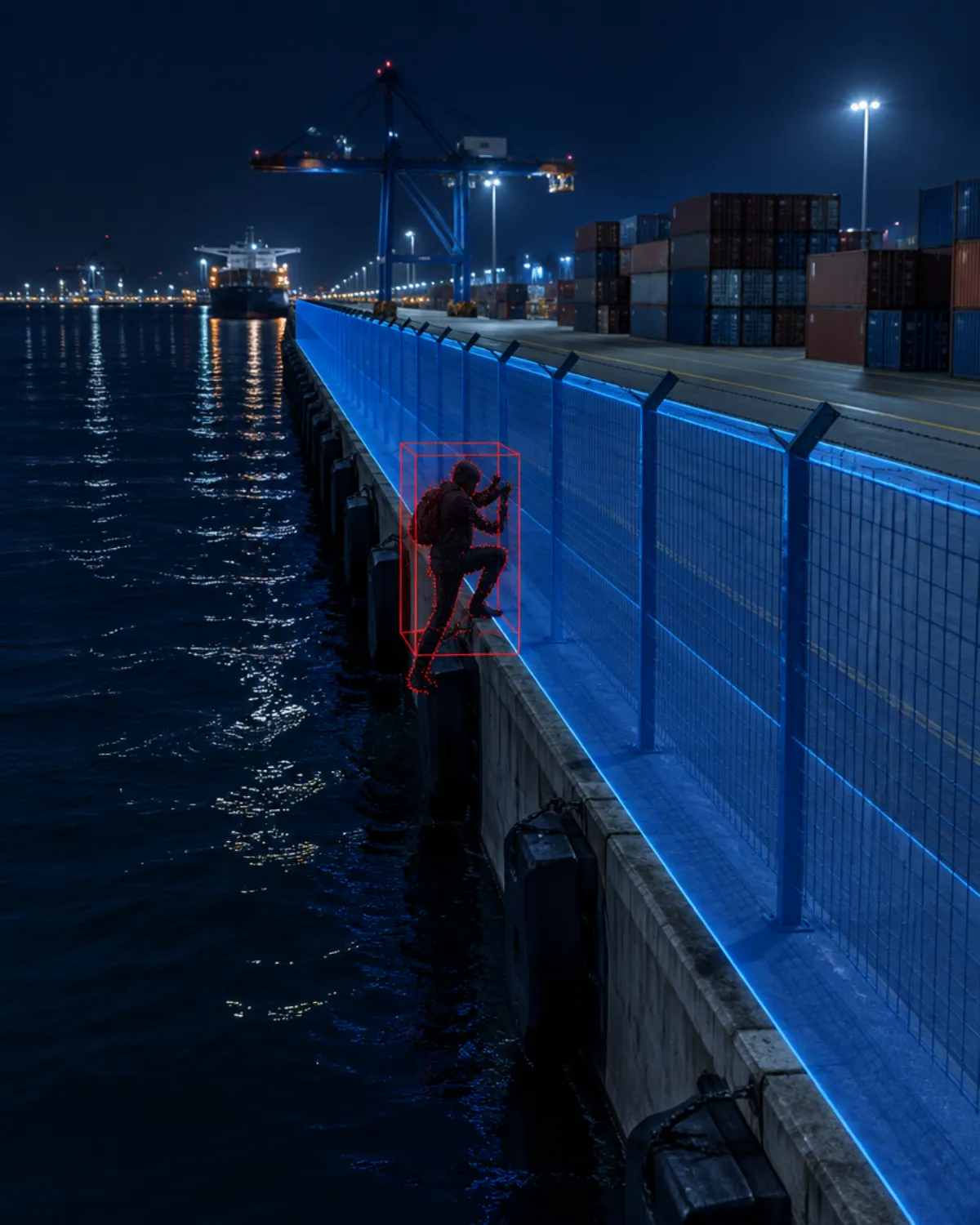
Watch the fence and the water side
Draw 3D zones along quay fences and shorelines so people climbing in from the water or the land side are detected and tracked in real time.
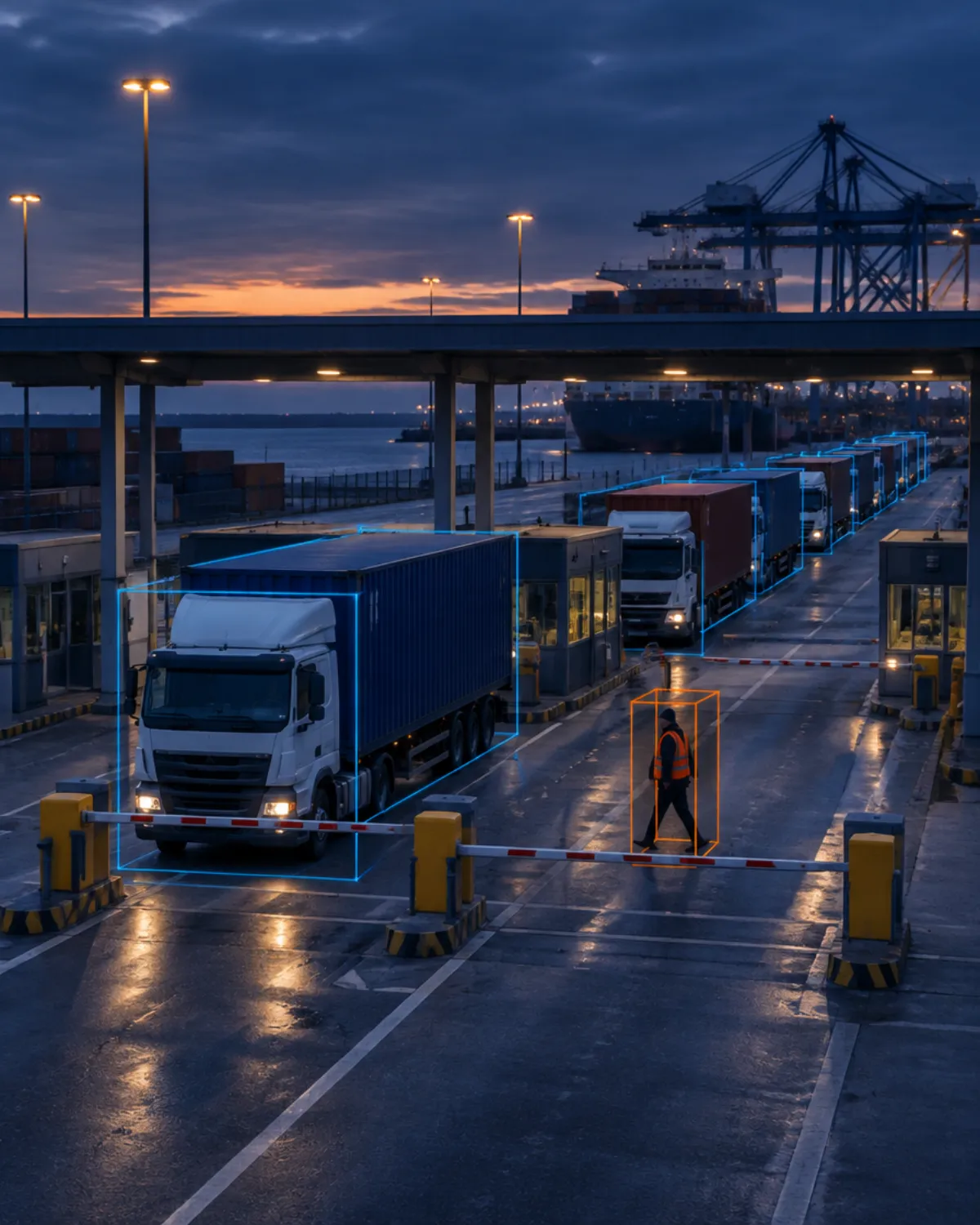
Every vehicle and person at the gate
Track trucks, cars and pedestrians through entry lanes and barriers, including someone walking around the gate instead of through it.
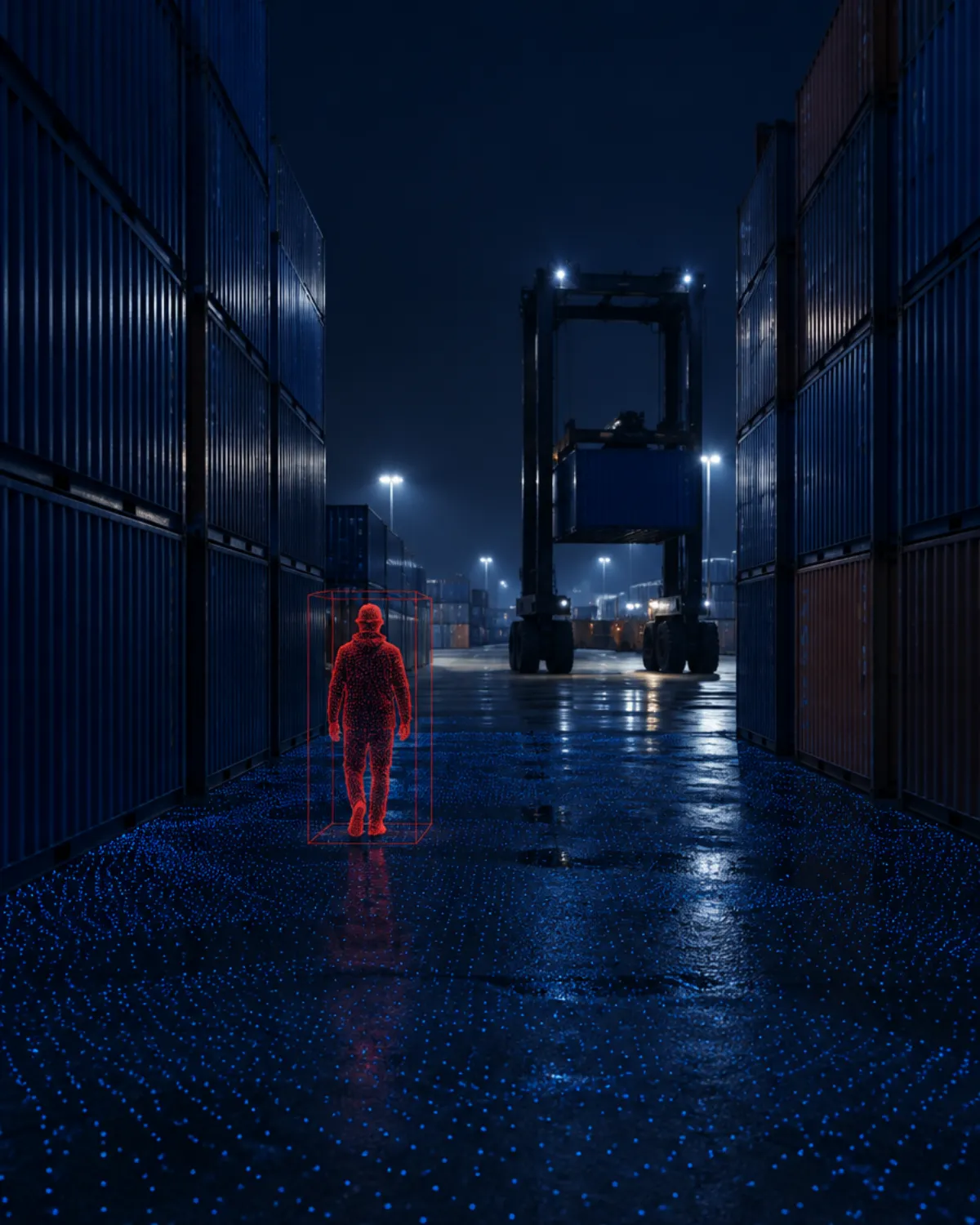
Find the person between the stacks
Detect and follow people moving through container rows after hours, where cameras lose sight lines and lighting is uneven.
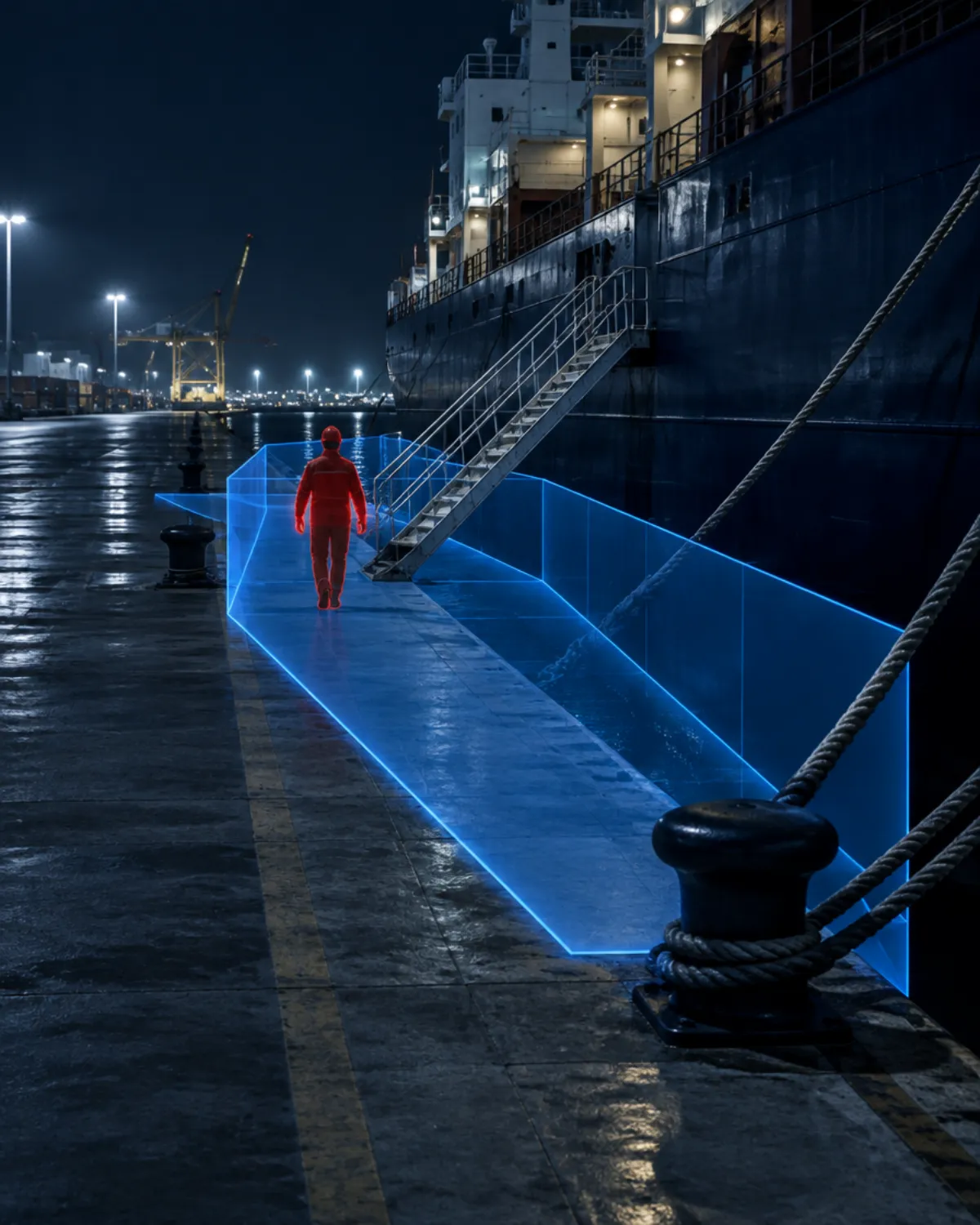
Protect the ship side of the quay
Create restricted zones around berths, gangways and mooring areas, and alert operators the moment someone enters.

The same answer at 3 a.m.
LiDAR brings its own light, so detection holds up at night, in bright glare off the water and in rain, without relying on floodlights.
Cameras turn to the threat
On detection, Q-TRACK sends real-time coordinates to PTZ cameras so operators verify in seconds, from one operations view.
Detect. Track. Classify. Alert.
Quanergy 3D LiDAR measures millions of 3D points per second. QORTEX DTC perception software detects, tracks and classifies every object, then sends alerts your existing security stack can act on.
- 1
Detect
360° 3D LiDAR covers wide areas with minimal blind spots, in any light or weather, including total darkness.
- 2
Track
QORTEX DTC follows every object with centimeter-level position, speed and direction, tracking up to 1,000 objects at once.
- 3
Classify
People and vehicles are classified by size and movement. Anything else is reported as an unclassified object, so alarms can be set on people and vehicles only.
- 4
Alert
Configurable 3D zones trigger real-time alerts and PTZ slew-to-cue, sent to your VMS and security operations center.
Fits the security stack you already run
Q-TRACK integrates with leading video management and security management platforms, so you upgrade detection without replacing your control room.
- Advancis
- Bosch/IQSIGHT BVMS
- exacqVision
- Genetec Security Center
- Hirsch Velocity
- IntelliCene / Symphia Control
- Milestone XProtect
- Motorola Avigilon Unity
- Network Optix
- Salient CompleteView
- Teledyne FLIR
Q-TRACK supports many more VMS and security platforms not listed here; confirm the integration for your platform and version during the assessment.
Securing a national port of entry in South Korea
A major port in South Korea, one of the country's main points of entry, needed to protect critical facilities against both intrusion and escape. Its fence-mounted optical sensors detected intruders only at the fence and generated a high number of false alarms. Port authorities selected Quanergy 3D LiDAR and QORTEX DTC perception software, deployed with integrator iCent and integrated with the port's existing PTZ cameras.
- Better than 95% accuracy at launch, rising to 98%
- Significantly lower rate of false alarms
- Reliable in bright and low light, wind and rain
- Automatic PTZ tracking of detected threats
“LiDAR leads the way in detection accuracy and is quickly replacing other competing technologies.”Moon WonSang, CEO, iCent, via LIDAR Magazine
Port security with 3D LiDAR: common questions
Why do ports need 3D LiDAR perimeter detection?
Ports combine long waterfront fences, busy gates, container stacks and restricted berths. Fence-mounted sensors and cameras often detect only at the fence line or miss people between containers. 3D LiDAR detects, tracks and classifies people and vehicles across open areas in real time, in any light.
Has Quanergy LiDAR been deployed at a port?
Yes. A national port facility in South Korea, one of the country's major points of entry, deployed Quanergy 3D LiDAR and QORTEX DTC perception software with integrator iCent. The case study reports better than 95% accuracy at launch, rising to 98%, with a significantly lower rate of false alarms.
Can LiDAR detect someone coming from the water side?
Yes. 3D zones can be drawn along the quay edge and shoreline, so a person climbing from the water or approaching along the waterfront is detected and tracked with an exact position.
Does it work at night and in bad weather?
Yes. LiDAR provides its own illumination, so detection does not depend on daylight or floodlights, and it performs in bright glare and low light and in wind or rain.
Does it work with existing PTZ cameras and security systems?
Yes. In the Korea deployment, the LiDAR solution integrated with the port's existing PTZ cameras. Q-TRACK integrates with leading VMS and security management platforms and sends real-time coordinates for slew-to-cue.
Does LiDAR capture personally identifiable information?
No. LiDAR measures shape, position and movement as 3D points, not faces or license plates.
Secure every point of entry
Tell us about your terminals, gates and berths. Our team will map where 3D LiDAR closes blind spots and cuts false alarms.