

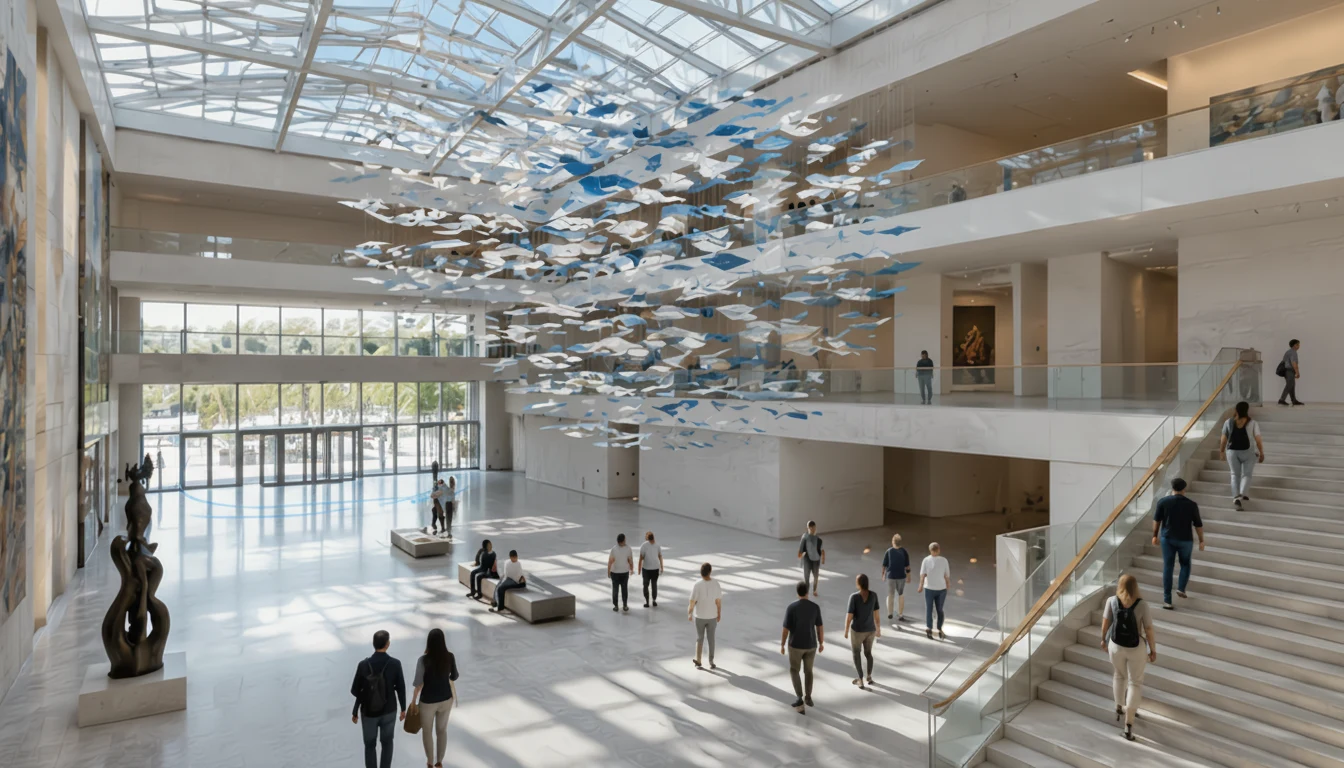
3D LiDAR Improves Museum Security and the Visitor Experience
3D LiDAR technology delivers a more efficient, less obtrusive and highly cost-effective tool for museum security and management personnel.
Protecting patrons, personnel and invaluable assets
More people visit museums, science centers, historic houses or sites, zoos, or aquariums than attend professional sporting events. In fact, museums are more than just a source of cultural enrichment, they also help drive the US economy, generating over $50 billion in revenue annually and the source of over 725,000 jobs. Museums are also highly regarded as safe havens, providing visitors with nurturing and comforting environments that are seen as highly trustworthy.
Protecting the patrons, personnel and invaluable assets of museums is both a priority and a challenge for museum management given the open nature of these institutions around the world.
Balancing Surveillance and Security with the Visitor Experience
Museums must ensure a high level of security without creating an intrusive or uncomfortable environment for patrons and personnel. Visible and obtrusive security devices and personnel can detract from the visitor experience. Therefore it’s imperative to implement a delicate balance of effective security while maintaining a welcoming atmosphere with personal privacy.
Quanergy offers a comprehensive solution for museums by addressing both security and flow management challenges. Our 3D LiDAR sensors provide 360° coverage, operate in all lighting conditions, reduce false alarms, integrate with existing systems, and deliver a cost-effective solution that enhances security, safety and the user experience of museum visitors. By adopting Quanergy 3D LiDAR technology, museums can better ensure that valuable exhibits are protected, and that visitor flow management is optimized to better establish and maintain a welcoming and engaging user experience.

Protect exhibits without barriers
Track people around high-profile pieces and alert staff when someone enters a protected zone.

Prevent overcrowding at peak times
Accurate visitor density in specific areas, so flow can be managed during special exhibitions.

Find the rooms nobody visits
Document underused areas and redistribute visitors across the whole facility.
Turn movement into the input
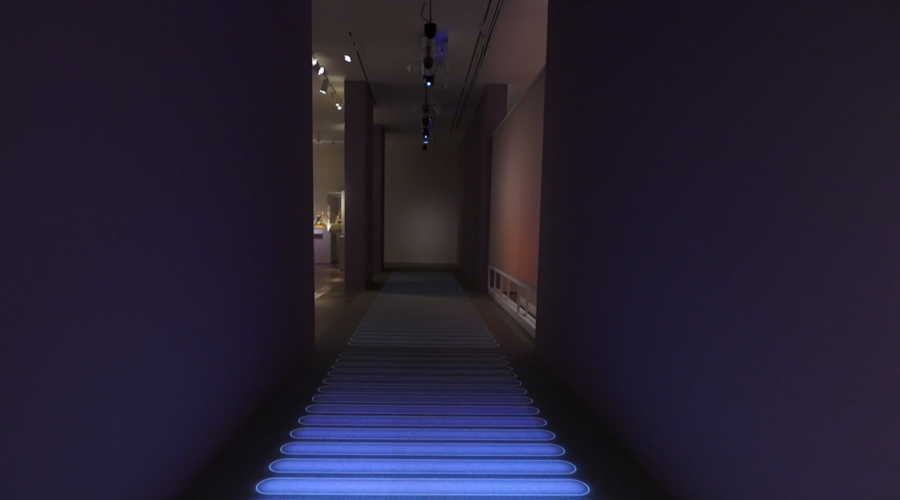
Trigger sound, media and lighting from visitor position, with no screens, wearables or cameras.

Same coverage with the lights off
Detect and track people in complete darkness, fog or smoke, even behind pillars and statues.

Deploy staff where visitors are
Real-time crowd data guides staffing and helps manage emergency events and evacuations.
Why 3D LiDAR Technology Pairs well with Museums
Quanergy 3D LiDAR sensors enhance conventional video surveillance by providing 3D data in real-time. Unlike conventional 2D video cameras, which are limited by flat images and a narrow field of view, Quanergy 3D LiDAR sensors monitor environments in three dimensions, creating an immersive point cloud for comprehensive spatial and situational awareness.
A truly interactive solution, Quanergy 3D LiDAR sensors capture data by emitting laser pulses that bounce off objects and return to the sensor. By measuring the time it takes for these pulses to return, 3D LiDAR accurately maps surroundings. The real-time data reveals the presence of objects, capturing their distance, size, and movement patterns, offering valuable insights and intelligence for security, safety, retail operations, maintenance, flow management, and numerous other business applications.
Quanergy 3D LiDAR also functions effectively in all environmental and lighting conditions, indoors and outdoors, making it a vital addition for virtually any surveillance application. These small yet powerful sensors provide 360° coverage, eliminating blind spots common in traditional systems.
Whether in complete darkness, fog or smoke, Quanergy 3D LiDAR sensors will accurately detect, classify and continuously track people and objects/vehicles with precision, even when they pass behind fixed objects such as pillars, statues and/or freestanding exhibits. The extensive coverage capabilities of Quanergy 3D LiDAR sensors ensures that all crucial internal and external areas are always closely monitored for anomalies.
Improves User Experience, Flow Management and Space Utilization
A discreet presence
Museums aim to provide visitors with an engaging educational and cultural experience, but managing their journey through the museum is difficult without real-time data.
Visible and intrusive security measures, such as cameras or motion detectors, can detract from the visitor experience, while traditional flow management tools may require overt signage or barriers that disrupt the museum’s atmosphere. Quanergy 3D LiDAR sensors are small, discreet, and can be placed unobtrusively within the museum environment, providing high levels of security and visitor tracking without detracting from the visitor experience. This helps maintain a welcoming and immersive atmosphere while ensuring protection and efficient flow management.
Crowd Management Applications
Popular exhibits often attract large numbers of visitors, leading to overcrowding and congestion in specific areas. This not only diminishes the visitor experience but also creates safety hazards and potential risks to exhibits. Quanergy 3D LiDAR sensors accurately report the density of visitors in specific areas within museums. Utilizing this real-time data enhances visitor flow management to prevent overcrowding without negatively impacting the visitor experience, especially during peak times or special exhibitions.
And while some exhibits attract large crowds, other areas of the museum may be underutilized, leading to an uneven distribution of visitors throughout the facility. This can result in some areas being overcrowded while others remain empty. Quanergy 3D LiDAR sensors can easily document the inefficient use of space, which can limit the museum’s ability to showcase its most frequently visited exhibits more effectively.
Real-Time Data and Analytics Improve Overall Operations
Traditional methods of visitor tracking, such as manual counting or basic video camera systems, do not provide real-time insights or detailed analytics on visitor movements and behavior. The absence of real-time data makes it difficult to respond quickly to emerging issues, such as unexpected crowding or changes in visitor flow, limiting the museum’s ability to adapt on the fly. Quanergy 3D LiDAR sensors capture invaluable data on crowd movement, providing actionable intelligence for more efficient traffic flow and crowd management. This also aids in optimizing staff deployment, reducing the burden on personnel, particularly in large museums or during special exhibitions when visitor numbers can surge.
Benefits of 3D LiDAR for Museums and Art Galleries
Protects Against Theft and Vandalism
Quanergy 3D LiDAR sensors provide a highly accurate means to track up to 1000 individuals simultaneously in high traffic interior spaces, ideal for busy and high-profile exhibit areas.
Limited Coverage and Blind Spots
Eliminates incomplete surveillance which can lead to gaps in security, increasing the risk of theft or damage to valuable artifacts.
Works in Any Lighting Condition
Enables effective surveillance in low-light environments, which cause missed detections and false alarms, compromising overall security.
Low Cost of Coverage
With its extended range and ability to cover large areas with fewer devices, Quanergy 3D LiDAR sensors reduce the overall cost per square/foot of coverage of employing comprehensive video surveillance with far superior performance.
Real-Time Threat Detection and Response
Quanergy 3D LiDAR provides continuous real-time tracking of people and objects, allowing for automated responses in security scenarios and dynamic visitor flow adjustment management. This ensures that security personnel are alerted only to genuine threats, and visitor congestion is managed proactively, improving overall operational efficiency and creating a better user experience.
Enhances Safety and Emergency Management
Quanergy 3D LiDAR’s precise tracking improves the ability to better manage emergency events and evacuations faster and more efficiently which reduces potential harm to individuals, loss of valuables and liabilities.
Reduces False Alarms and Alarm Fatigue
Traditional security systems typically generate a high number of false alarms due to misidentifications or environmental factors. Quanergy 3D LiDAR sensors help to reduce false alarms, which increase costs, strain resources, reduce operational efficiency, and can cause real critical threats to be overlooked.
Integration and Implementation
Quanergy 3D LiDAR sensors integrate with major Video Management Systems (VMS) and Pan-Tilt-Zoom (PTZ) cameras without the need for significant modifications, ensuring smooth, fast and easy implementation without disruption to daily operations.
An interactive exhibit at a major New York City museum
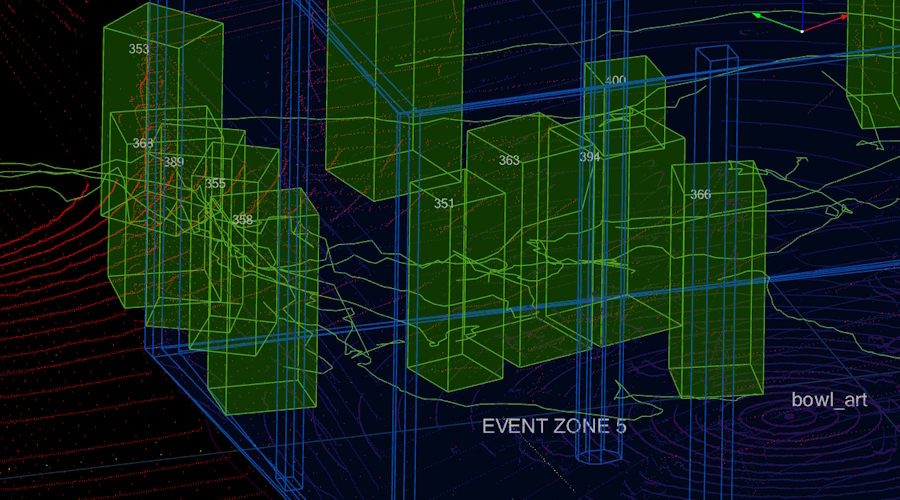
A major New York City museum built an immersive exhibit that responds to visitor presence and movement in real time. Quanergy Q-TRACK 3D LiDAR senses anonymous movement across the exhibit space and drives zone-based interaction that triggers sound, media and lighting, with no screens, wearables, cameras or facial recognition.
- Real-time sensing of anonymous visitor movement
- Privacy-first: no facial recognition or wearables
- Zone-based design that adapts as the exhibit changes
- An always-on sensing layer that stays out of sight
Maintain Compliance and Audit Reporting
Museums must adhere to several industry regulations and compliance requirements when implementing security and visitor management systems, including 3D LiDAR technology. These regulations often focus on personal privacy, safety, and operational standards, ensuring that the technology used is both effective and respectful of visitors’ rights. Here are some key areas where Quanergy 3D LiDAR sensors assist in maintaining compliance:
Data Privacy Regulations
Quanergy 3D LiDAR sensors track movement without capturing personally identifiable information (PII), thereby respecting visitor privacy. The data collected is typically anonymized and used solely for security and flow management purposes. Transparent communication with visitors about the technology’s use can help alleviate privacy concerns while complying with the General Data Protection Regulation (GDPR) in the European Union and the California Consumer Privacy Act (CCPA) in the United States.
Quanergy 3D LiDAR sensors can also help maintain compliance with regional privacy laws that govern the use of surveillance and tracking technologies, such as Canada’s Personal Information Protection and Electronic Documents Act (PIPEDA) or Australia’s Privacy Act.
Cultural Property and Artifact Protection
3D LiDAR can also help maintain compliance with International Council of Museums (ICOM) Guidelines on the ethical management and protection of cultural property. Quanergy 3D LiDAR sensors do not endanger the artifacts or disrupt the cultural experience of visitors. Museums that house cultural heritage artifacts may also be subject to UNESCO mandates that require the protection of these items against theft, illicit trade, and damage.
Security and Surveillance Regulations
Many jurisdictions also have specific laws governing the use of video and other forms of surveillance technology. Quanergy 3D LiDAR sensors’ performance and ability to generate actionable data insights can help museums meet these compliance regulations. Addressing these considerations is essential to ensure that the technology is used legally, ethically, and effectively, while also protecting the privacy and safety of visitors and safeguarding cultural property. Compliance with these regulations not only helps avoid legal repercussions but also enhances the museum’s reputation as a responsible and visitor-focused institution.
Museum security and visitor flow with 3D LiDAR: common questions
How does 3D LiDAR improve museum security?
Quanergy 3D LiDAR detects, classifies and continuously tracks people across galleries in real time, in any lighting, even behind pillars, statues and freestanding exhibits. Staff are alerted when someone enters a protected zone, without visible barriers.
Does LiDAR capture faces or personal data?
No. Quanergy 3D LiDAR tracks movement as 3D points without capturing personally identifiable information, which supports privacy regulations such as GDPR and CCPA.
How many visitors can one sensor track?
Quanergy 3D LiDAR sensors can track up to 1,000 individuals simultaneously in high traffic interior spaces, with 360 degree coverage per sensor.
Can it help with crowding at popular exhibits?
Yes. Sensors report visitor density in specific areas in real time, so staff can manage flow during peak times and special exhibitions, and spot underused rooms.
Can LiDAR power interactive exhibits?
Yes. At a major New York City museum, Quanergy Q-TRACK turns visitor movement into zone-based triggers for sound, media and lighting, with no screens, wearables or cameras.
Does it work with our existing cameras and VMS?
Yes. Quanergy 3D LiDAR integrates with major video management systems and PTZ cameras without significant modifications.
Talk to a museum smart space expert
Speak to one of our Museum smart space experts to see how Quanergy 3D LiDAR solutions can help enhance security, safety and overall operations at your museum.